Methodology
LEAF is structured into five work packages (WPs), covering management, exploitation, and three core research areas: materials development, advanced printing, and device fabrication. The project follows a clear roadmap supported by defined milestones and deliverables to ensure measurable progress.
The research focuses on three main material classes:
1. Photo-storage nanomaterials
2. Surface-engineered 2D materials
3. Functional polymers
These materials are formulated into printable inks with carefully tuned rheological properties to ensure high-resolution, stable deposition. Using advanced printing techniques, including High Precision Capillary Printing (HPCAP), we will fabricate micro-supercapacitors, interconnects, and antennas directly onto ultrathin substrates.
Device performance will be evaluated through electrical and photo-electrochemical characterization under controlled illumination conditions. Final devices will be transformed into 3D architectures and deployed onto real surfaces, where their mechanical robustness and wireless performance will be tested in both powered and non-powered modes.
Open Science and Data Management
LEAF adopts a strong open science approach, ensuring that data, protocols, and tools are shared in line with FAIR principles (Findable, Accessible, Interoperable, Reusable). Selected datasets will be openly available via platforms such as Zenodo and arXiv, while sensitive or IP-related data will be protected when necessary. A dedicated Data Management Plan will guide all data handling and dissemination activities.


Interdisciplinarity
LEAF is inherently multidisciplinary, combining expertise in materials science, chemistry, physics, and engineering to address the challenges of autonomous micro-devices. The consortium brings together complementary skills across material synthesis, microfabrication, and device integration.
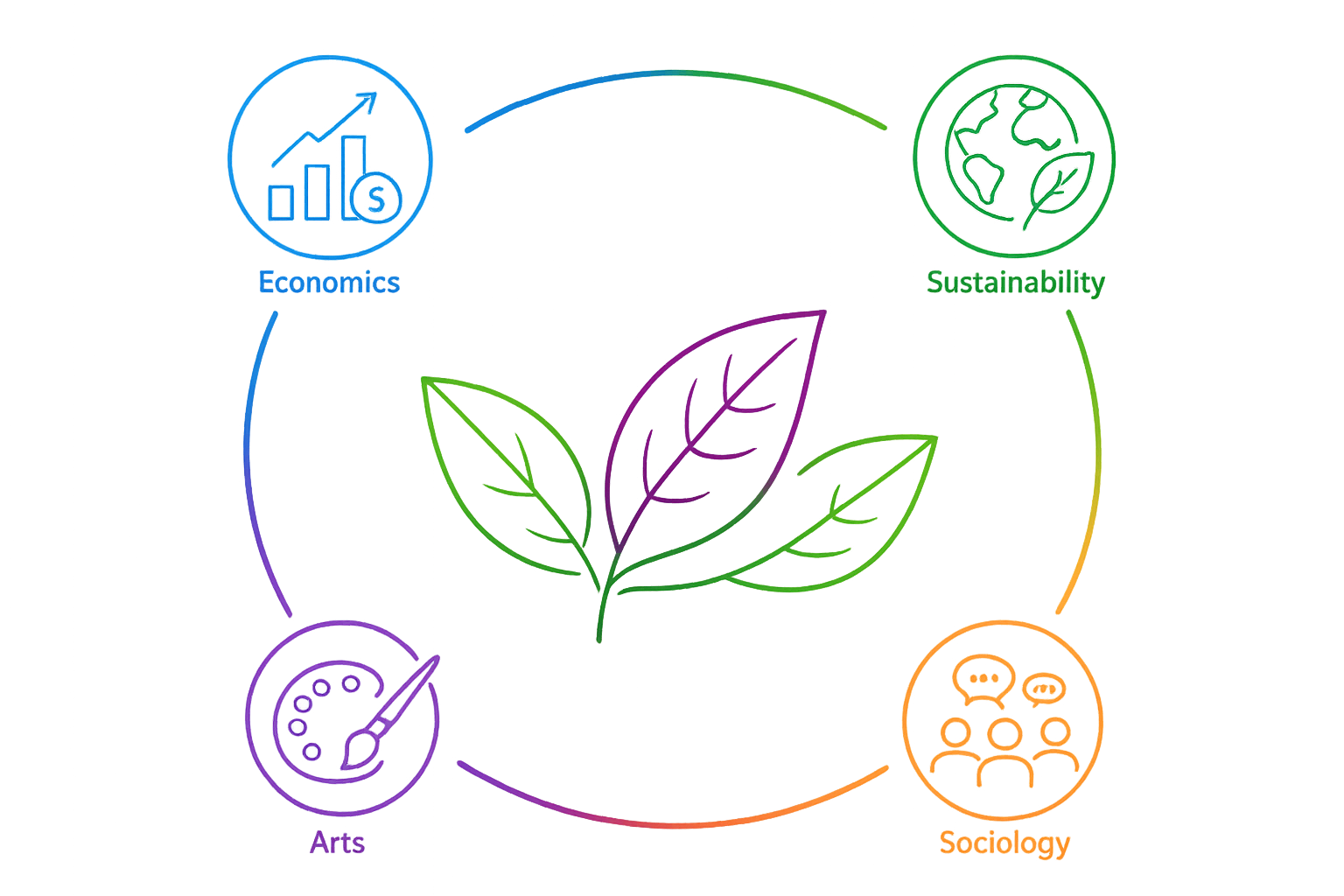
Beyond STEM, LEAF integrates perspectives from:
– Economics, through life-cycle cost and impact analysis
– Sustainability, via environmentally responsible materials and processes
– Sociology, by assessing user acceptance and societal impact
– Arts, using creative approaches to enhance communication and outreach
This cross-disciplinary approach ensures both technological innovation and societal relevance.